Alex Mastryukov — Founder of AIn't Doctor
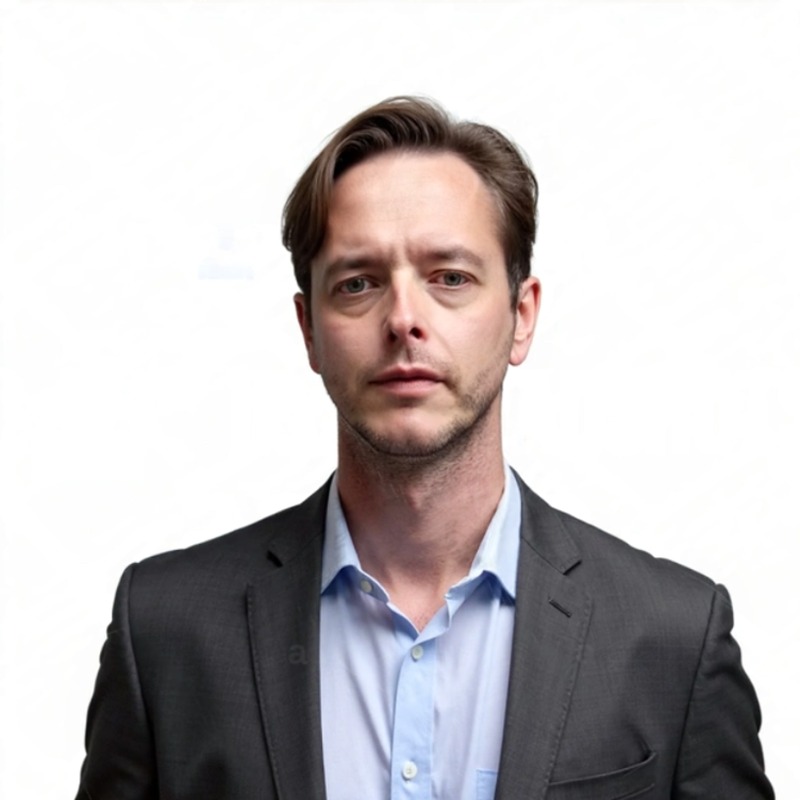
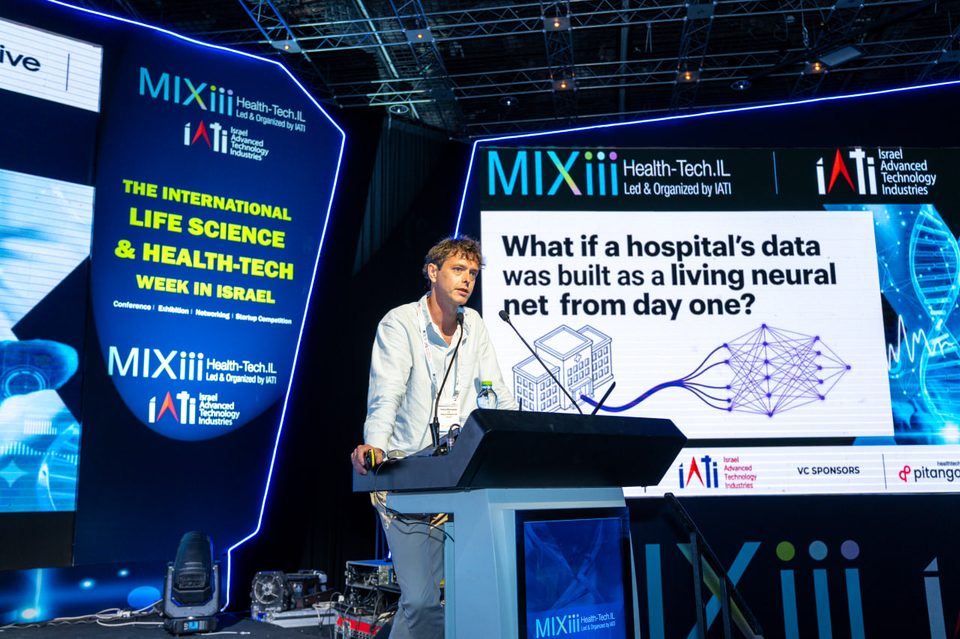
Hi, I'm Alex, founder of AIn't Doctor.
Technically, I'm a financial manager who somehow got trapped in healthcare IT.
I started in finance. Properly started, actually — university degrees, financial models, investments, all the things that were supposed to lead to a respectable career with spreadsheets, a suit and probably much less chaos.
Then, while I was still finishing university, somebody asked me to help with the business plan for a new medical center.
It sounded like a small project.
It wasn't.
A short time later I was standing in front of investors pitching a full private hospital project with MRI, CT, surgery, IVF and other things a 21-year-old probably should not have been responsible for yet.
Then I became the CFO and first employee of that project.
That was the beginning of the problem.
For the next years I learned healthcare the expensive way: by actually running it.
I helped build a hospital from scratch. Later I opened my own pediatric clinic, which grew into a small chain. Over the years I launched more than 15 clinics, managed several healthcare businesses directly, and eventually worked on healthcare IT projects and implementations for roughly 100 organizations.
And somewhere in the middle of all this I made the mistake that defined the rest of my career.
I decided to build an EHR.
I built healthcare software because I couldn't find software I wanted to use
When I was running clinics, I hated most of the systems available to me.
Some were ancient desktop monsters that had apparently survived several geological periods. Others were nice little cloud CRMs that could schedule an appointment but had absolutely no idea what was happening in the rest of the clinic.
I wanted one operational picture: reception, medicine, billing, analytics, communications, laboratory workflows, inventory, marketing, patient services — the actual business, not one isolated piece of it.
So at 26, with considerably more optimism than common sense, I decided we should build our own.
If I had understood properly what that would take, I probably wouldn't have done it.
Fortunately, I didn't.
That internal system eventually became a commercial healthcare platform. Other clinic owners started asking for it, and then things escalated quickly.
Over the following years we built and implemented systems for completely different healthcare businesses: outpatient clinics, hospitals, laboratories, IVF, genetics, imaging, surgery, psychiatry, rehabilitation and other workflows that all looked "basically the same" until you actually tried to implement them.
That cured me permanently of one idea:
There is no such thing as a generic clinic workflow.
Every clinic thinks its process is normal. Then you see another 50 clinics.
From software to the whole healthcare IT landscape
Eventually the work became much bigger than an EHR.
We built CRM, scheduling, medical records, laboratory systems, patient applications, telemedicine, billing, warehouse and ERP functions, analytics, communication channels, equipment integrations and all the boring connective tissue that actually makes a clinic run.
At the complex end, this meant replacing or connecting almost the entire IT landscape of a healthcare organization.
And after years of doing that, I ran into another problem.
Healthcare data exists. Healthcare workflows exist. But they are usually fragmented into systems that understand their own little piece of reality.
That becomes especially painful when you try to build serious analytics or AI on top.
So we spent years working on an infrastructure layer that could connect not only clinical records, but also operational events, transactions, workflows and relationships between them — and make the result usable by analytics and AI while keeping the path back to the underlying source data auditable.
In normal English: instead of giving AI a pile of disconnected records and hoping it figures everything out, we tried to give it the actual story of what happened inside the healthcare organization.
That work eventually became much more interesting to me than adding another checkbox to an EHR.
And it is one of the reasons AIn't Doctor exists.
Why AIn't Doctor
After all these years, I have become fairly skeptical of healthcare AI demos.
A demo is easy. The interesting part starts when you connect it to a real clinic.
Now you have physicians who do not want another system. Reception that has three unofficial ways to book the same procedure. Patient data. Security policies. An EHR with an API written by somebody who clearly disliked other developers. A lab device older than half your staff. A patient who sends a voice message instead of answering the question. And somebody from management asking why the thing you demonstrated beautifully last Tuesday does not work exactly the same way 2,000 times a day.
Been there. Done that.
That is why AIn't Doctor is operator-first.
We know software, AI, integrations and architecture. But before that, we know clinics.
We know how hard it is to introduce a new tool to physicians. We know how ridiculously complicated reception intake can become. We know that "just integrate it with the EHR" can be a six-word description of three months of work. We know how patients behave when something goes wrong — including the part where they yell over the phone.
And we know one rule particularly well:
Sometimes the answer is a sophisticated AI system. Sometimes it is one integration and 300 lines of boring code. I am perfectly happy with either if the problem disappears.
Got a workflow that doesn't fit neatly into a product category?
See what counts as custom →What I do now
Today I work on healthcare AI, custom clinic automation, EHR and legacy-system integrations, patient communication, analytics, clinical documentation workflows and the strange projects that do not fit neatly into any product category.
Those are often my favorites.
I have spent more than 17 years sitting on both sides of the table: as the person running the clinic and asking why the software is not working, and as the person responsible for making the software work.
That changes how you build things.
I am not particularly interested in "AI transformation."
I am interested in finding the expensive, annoying, repetitive part of a healthcare operation and making it stop eating people's time.
Preferably without breaking anything else in the process.
That is basically the idea behind AIn't Doctor.